Dr. Annamalai’s research program investigates how immune and stromal cells coordinate musculoskeletal tissue repair and how dysregulated signaling drives fibrosis, nonunion, osteoarthritis, and skeletal fragility. His laboratory integrates macrophage mechanobiology, biomaterials engineering, immunology, cellular senescence, quantitative imaging, and preclinical disease models to develop regenerative and disease-modifying therapies.
Current research focuses on how mechanical strain and matrix properties regulate macrophage function during fracture healing, the role of pro-fibrotic macrophage populations in dysfunctional repair, and the development of engineered materials, microcarriers, nanocarriers, and hydrogels for targeted immune modulation and sustained therapeutic delivery. Complementary efforts extend these strategies to osteoporosis, osteoarthritis, and longitudinal monitoring of inflammation and tissue healing using wearable electrical impedance tomography.
Supported primarily through NIH grants, Dr. Annamalai’s multidisciplinary laboratory seeks to identify predictive biomarkers of impaired healing and translate mechanistic insights into therapies that prevent fibrotic nonunion, restore skeletal regeneration, treat osteoarthritis, and improve musculoskeletal health.
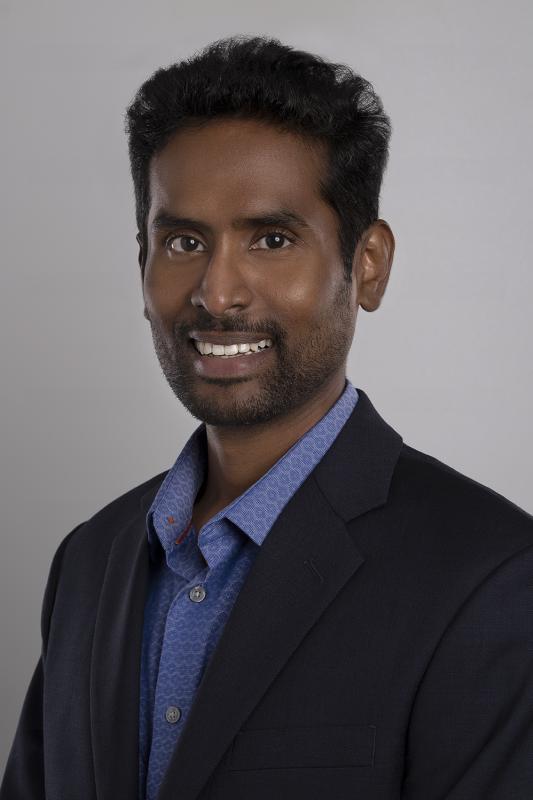
Ramkumar T. Annamalai is an Assistant Professor in the Department of Biomedical Engineering at the University at Buffalo. He completed his postdoctoral training in Biomedical Engineering at the University of Michigan. His research spans both fundamental and translational science, with a focus on developing reconstructive biomaterials, diagnostic devices, preventive immunotherapies, disease-modifying therapeutics, and other technologies for musculoskeletal health.
Drawing on interdisciplinary training in bioengineering, immunology, and tissue regeneration, Dr. Annamalai engineers biomaterials and disease models, identifies signaling pathways that regulate tissue repair, and develops immunomodulatory therapies. He is committed to teaching, mentoring, and academic service, and has served on academic committees, reviewed manuscripts for peer-reviewed journals, and contributed to journal editorial boards and NSF and NIH study sections. He also serves as a faculty mentor for student chapters.