The native extracellular microenvironment dynamically remodels as cells synthesize and assemble their surroundings during tissue development, injury, and repair. Yet, how newly deposited or nascent matrix integrates with the biochemical, mechanical, and geometric properties of the surrounding tissue to regulate cell function remains poorly understood. Our group develops biomaterials, chemical labeling strategies, and engineered tissue models to investigate these reciprocal cell-matrix interactions across scales.
In this talk, I will share our recent efforts to visualize and identify cell-derived nascent matrix within engineered hydrogels to probe how material properties such as polymer modification and mechanics guide matrix production and cell state. I will then discuss ex vivo lung models that enable controlled manipulation of tissue stiffening and matrix remodeling, as well as in vivo cell-type-specific labeling strategies designed to resolve the origins and dynamics of newly synthesized matrix during lung injury and repair. Finally, I will highlight emerging work on how matrix geometry and curvature regulate cell organization and function. We believe that these studies establish a framework for connecting matrix synthesis and remodeling to cell function in complex tissue environments. Our evolving understanding of these dynamic interfaces may uncover mechanisms of tissue dysfunction and guide the design of biomaterials that promote repair and regeneration.
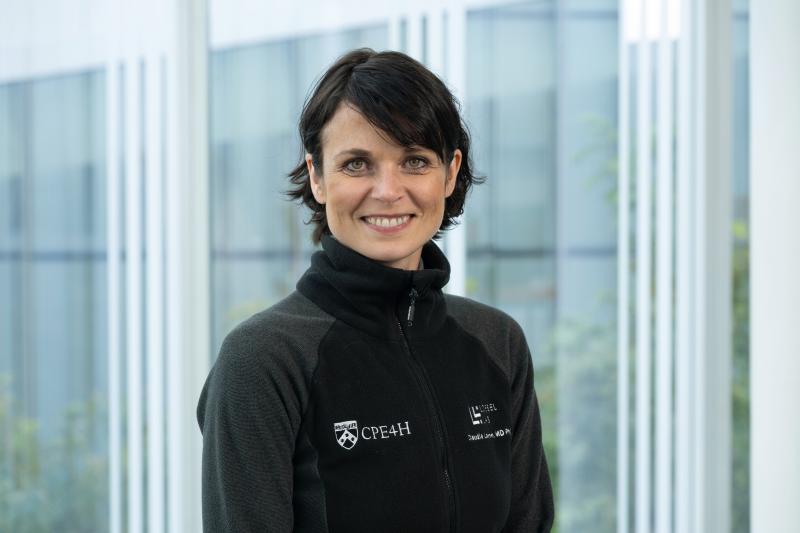
Claudia Loebel, MD, PhD, is an Assistant Professor of Bioengineering and a core faculty member of the Center for Precision Engineering for Health at the University of Pennsylvania. She received her MD from Martin Luther University Halle-Wittenberg in Germany in 2011 and her PhD from ETH Zurich in Switzerland in 2016. She subsequently completed postdoctoral training with Professor Jason Burdick at the University of Pennsylvania.
The Loebel laboratory develops metabolic labeling methods, biomaterial platforms, and engineered tissue models to investigate how cells synthesize and remodel their extracellular matrix and how these nascent matrix microenvironments, in turn, regulate cell and tissue function. This work spans fundamental studies of cell–matrix interactions and mechanobiology, the regulation of lung alveolar stem and progenitor cell fate, and the development of engineered strategies for tissue repair and therapeutic intervention.
Dr. Loebel is an Associate Editor of the Journal of Biomedical Materials Research Part A. Her honors include the 2026 Society for Biomaterials Young Investigator Award, a 2023 Packard Fellowship for Science and Engineering, an NIH NIGMS Maximizing Investigators’ Research Award, an NIH NHLBI Pathway to Independence Award, and an American Lung Association Innovation Award.